|
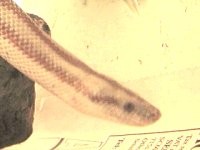
Rosy boas are small boids,
native to California. They seem to adapt well to captivity.
While I assume from the literature they are quite a commonly
kept snake in the USA, they are uncommon in the UK, and so
my experience of these is limited. to the mid Baja variant
"saslowi".
|
|
By nature a desert snake, rosy
boas are (allegedly) among the hardiest of the boids and can
tolerate a wide range of temperature conditions, but do seem
to prefer the warmer tank.
|
|
|
|
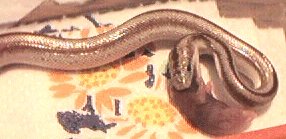
Rarely
exceeding three feet in length rosy boas take well
to the captive environment, and thrive in a basic
vivarium, taking small mice avidly.
|
|
|
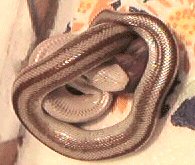
As they are
mainly nocturnal hunters, food should theoretically
be presented accordingly. In prctice I find them to
be good feeders at any time.
|
|

|
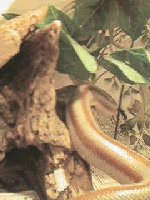
Unlike many ground boas, rosy
boas are supposed to climb. In the wild they climb cliffs
and trees in pursuit of prey.
Certainly my rosies
climb.
|
|
|
|
|
Where some species of boid can have
trouble shedding their skins, it's been my experience that
rosy boas do not seem to suffer from incomplete sheds. I
would guess that this is because incomplete shedding is
often related to inadequate humidity, and because sand boas
are from dry desert areas, they shed well in very low
humidity.
It's been my experience that rosies
are gentle easy - to - keep snakes. If I had to suggest
a good boa or python for a novice keeper I'd have to suggest
a rosy boa. However at a show I met a chap with a rosy
firmly bitten onto his hand. This chap said he had never
known anything but trouble from a rosy boa!
Remember - every snake is an
individual
|