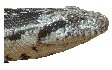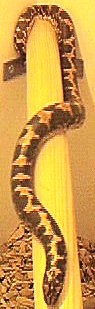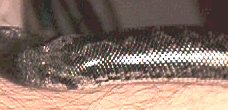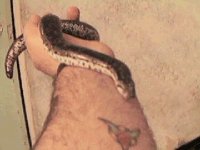
Sand Boas (Eryx sp.)
A slight technicality - -there are lots of species of sand boa (at least 10), and much of the scientific literature is confused on the subject - the experts seem to be arguing among themselves on the exact classification.

I'll basically stick to the species I keep (eryx conicus - the rough scaled and eryx colubrinus - the Kenyan), though I believe that what is true for these is pretty much OK for most of the other sand boas.

Unlike many other ground boas, sand boas are easy snakes to care for in captivity as long as their requirements of security and temperature are met.  Coming from southern Europe, northern Africa and central Asia, Sand boas are small boids, rarely exceeding a metre in length.

Because sand boas are small snakes they only require small cages. Sand boas like a substrate in which they can burrow. The correct choice for your snake will depend on the individual snake's preferences and what is available. Most species will acclimate to a substrate of newspaper with a secure hide box for cover, and will generally bury under the newspaper. However they will burrow if given an appropriate medium. Sand Boas have been known to die due to complications from ingesting sand, so consider using wood chip for them to dig in; give them about twice the depth of the snake's body.
While they are active, Sand Boas should be kept between 75 and 85 degrees F. Some individuals like to have access to a warmer area (up to 90 degrees F), particularly gravid females and snakes that have recently eaten. My female often basks against the heat mat. Sand boas are among the most temperature tolerent of boids, and, coming from a dry natural habitat, it has been reported by many keepers that these snakes rarely, if ever drink. Presumably they get their water requirements from their food. However be sure to give them a water bowl.  

Feeding: Mice and small rats are popular, and generally well taken, although smaller snakes can be fussy. I keep a pair of rough scaled sand boas; the female is incredibly greedy and eats everything avidly. The male is very fussy and very rarely eats. My trio of Kenyans used to be greedy - now they are very fussy.

Shedding: Where some species of boid can have trouble shedding their skins, it's been my experience that sand boas do not seem to suffer from incomplete sheds. I would guess that this is because incomplete shedding is often related to inadequate humidity, and because sand boas are from dry areas, they shed well in very low humidity.

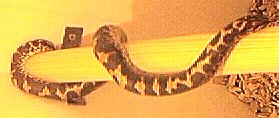
But like all snakes, remember that they haven't read the books - a so-called burrowing species which climbs.