So… you can’t find the
cache. Here’s some tips…
|
Your
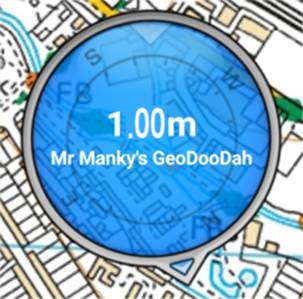
GPS says you are really close to it… just how accurate is your GPS?
Unless you can calibrate it against NASA’s satellites (you can’t!) you really have no
way of telling. Also
the positioning is *seriously*
affected by nearby power cables and tree cover. And
you can only ever hope to be as accurate as whoever put the cache out. If
they made a rush job of taking co-ordinates, or if they were affected by tree
cover (the difference in co-ords
between winter with no leaves and summer with leaves is amazing) then you
may well be out by up to ten yards or more. |
|
|
|
We’ll
talk about difficulty and terrain in detail later. But look at the D/T. Is it
difficulty level five (which means it
is a *hard* find)? Is it terrain level five (is it twenty yards up that tree, under that bridge or underwater in
that river?) |

|
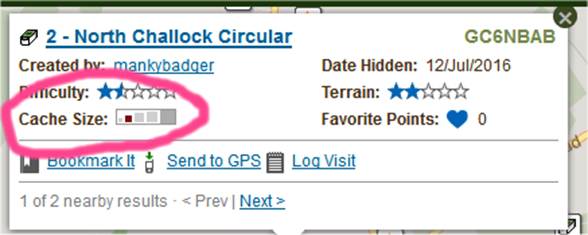
We’ll
talk about cache sizes in detail later, but how big is your target? Some
nano-caches can be smaller than your thumbnail |
|
Read the cache description and the hint
(if one has been given). Previous
“Found It” logs may give
you pointers, or seeing “Did Not
Find” logs may suggest the thing has gone missing.
But don’t be disillusioned. You
are *not* going to see it right away.
If you did then the normal people would also see it right away and report it to
the police because it is drugs or a bomb or something else equally ridiculous (they do that!). Let’s assume the
GPS signal is good (you are very close),
the D/T are good (not a hard find, not
inaccessible), and that it is actually there. So what give-away signs are
we looking for?
|
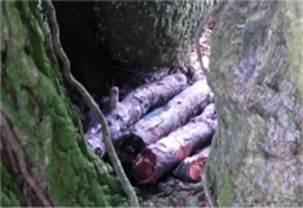
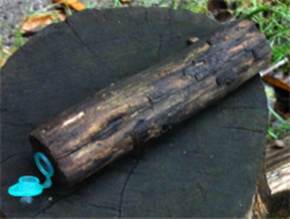
“stickoflage” – is there a rather orderly pile of
sticks hiding something? |
“Magnetic” – stuck to something metal? |
|
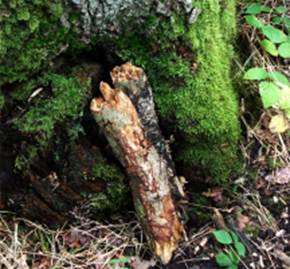
In a hole at the base
of a tree? |
A fake object? |
|
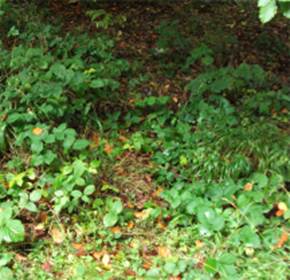
Is there a “cacher’s trail” where
previous cachers have been? |
“log” your visit ? |
|
Behind an innocuous
sign? |
Under the obvious
target? |